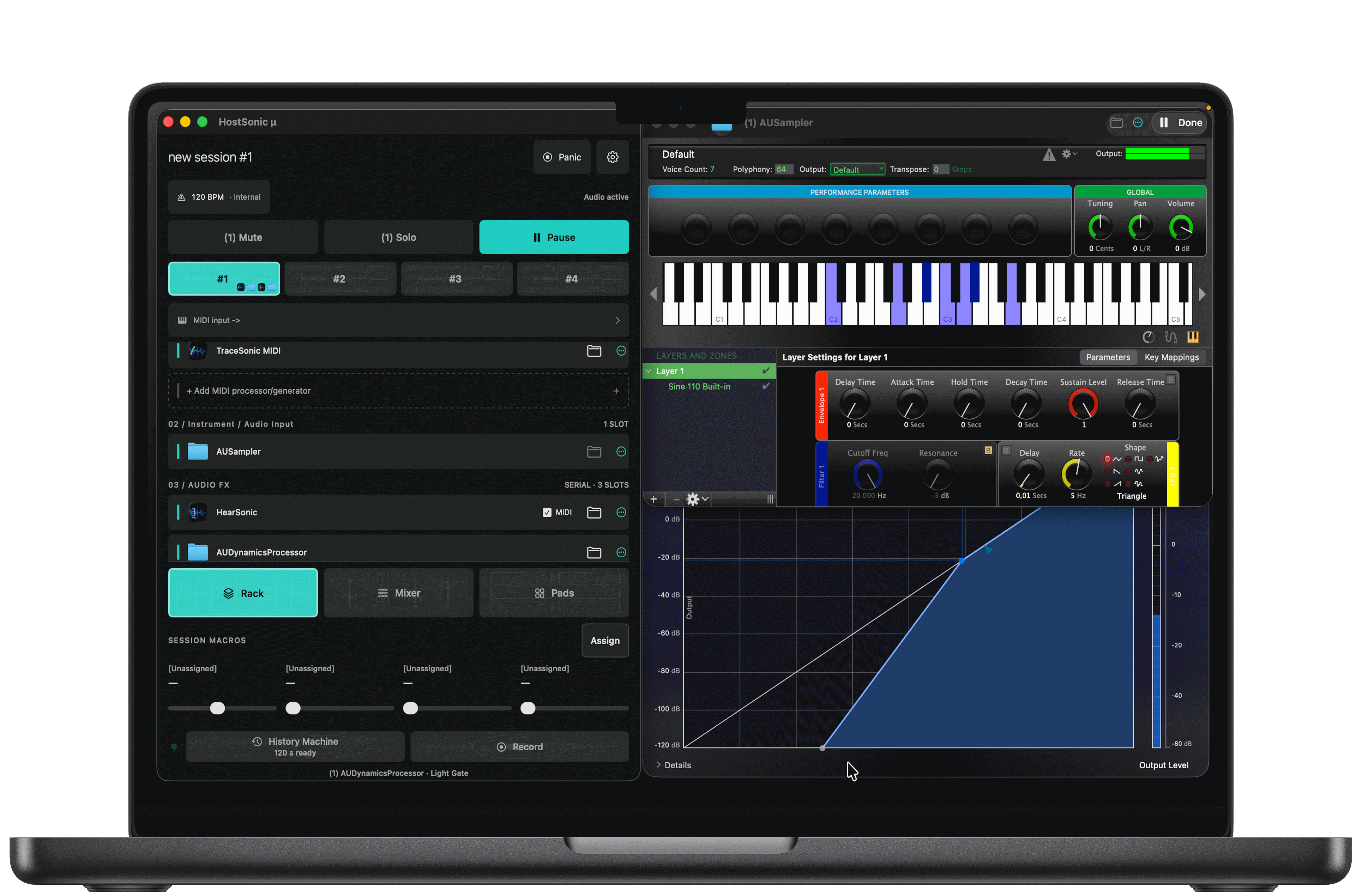
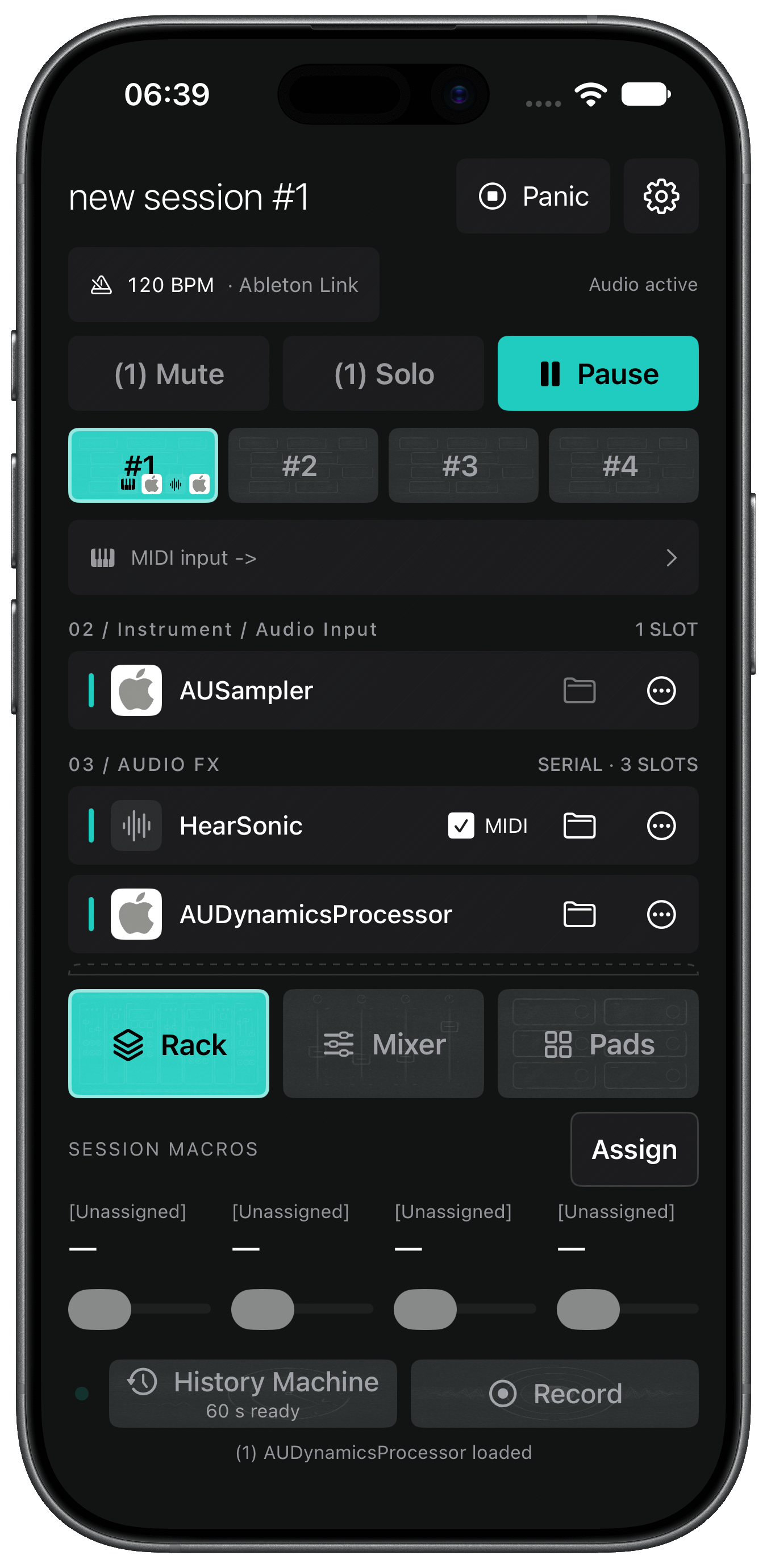
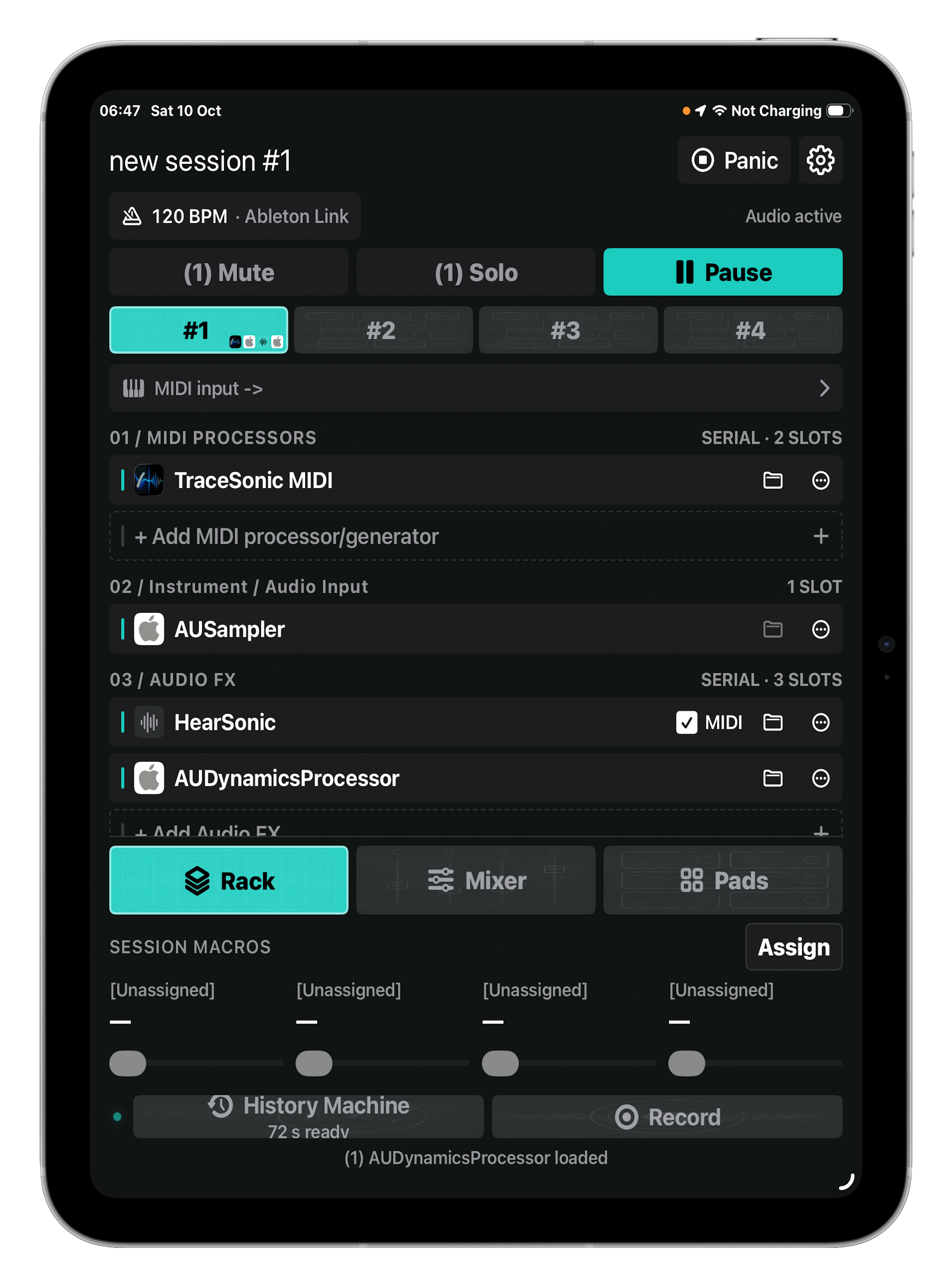
HostSonic μ is a straightforward, focused Audio Unit host for iPhone, iPad and Mac. Quickly combine instruments, MIDI processors, effects, live input and audio or MIDI files across four tracks, its features are deliberately cut, but cat still produce and record a complete mix in a DAW-less-like session.
Host for Audio Unit plug-ins
Four tracks, plug-ins and files
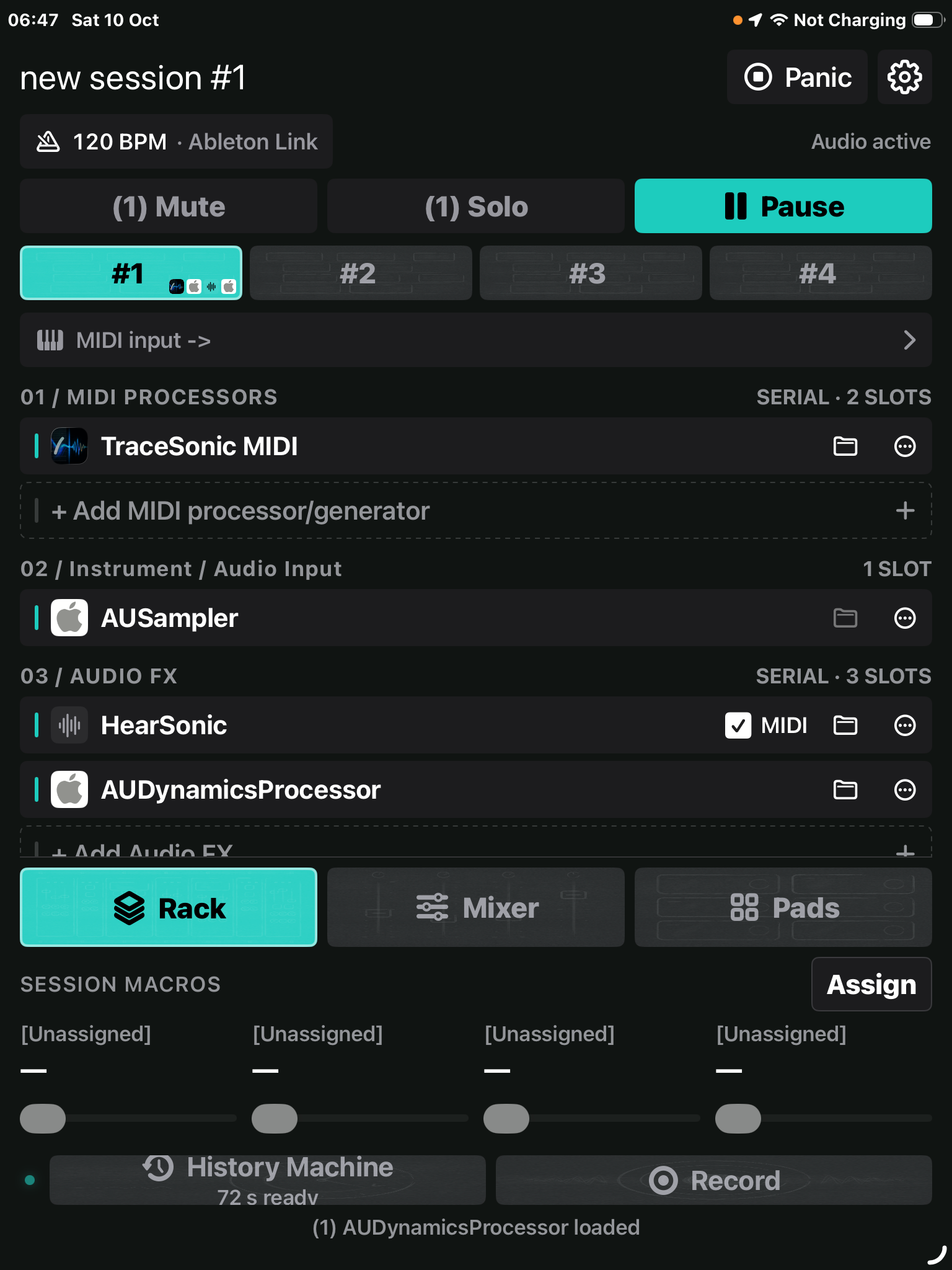
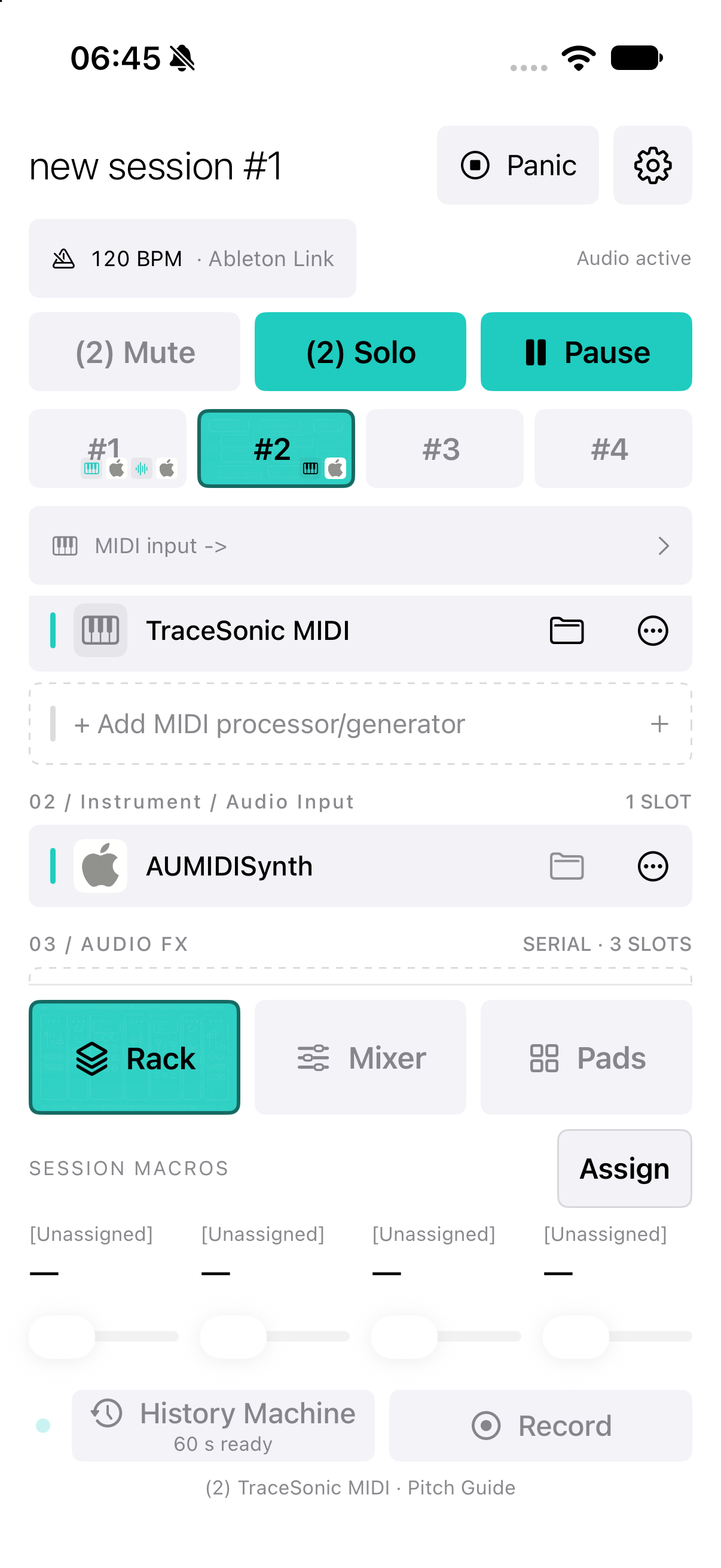
Four tracks, each with up to two MIDI processors or generators, one instrument or audio source, and three effects. AUv3 is supported across all platforms, with AUv2 also available on Mac. Sources include device input, Link Audio and audio files.
File playback has a waveform, start position and looping, and follows the host transport. WAV, AIFF, CAF, MP3, AAC/M4A, ALAC and FLAC are supported, along with other formats the system can decode. Standard MIDI files can play through the bundled GeneralUser GS bank, including program changes and channel 10 drums.
Quick access and open sessions
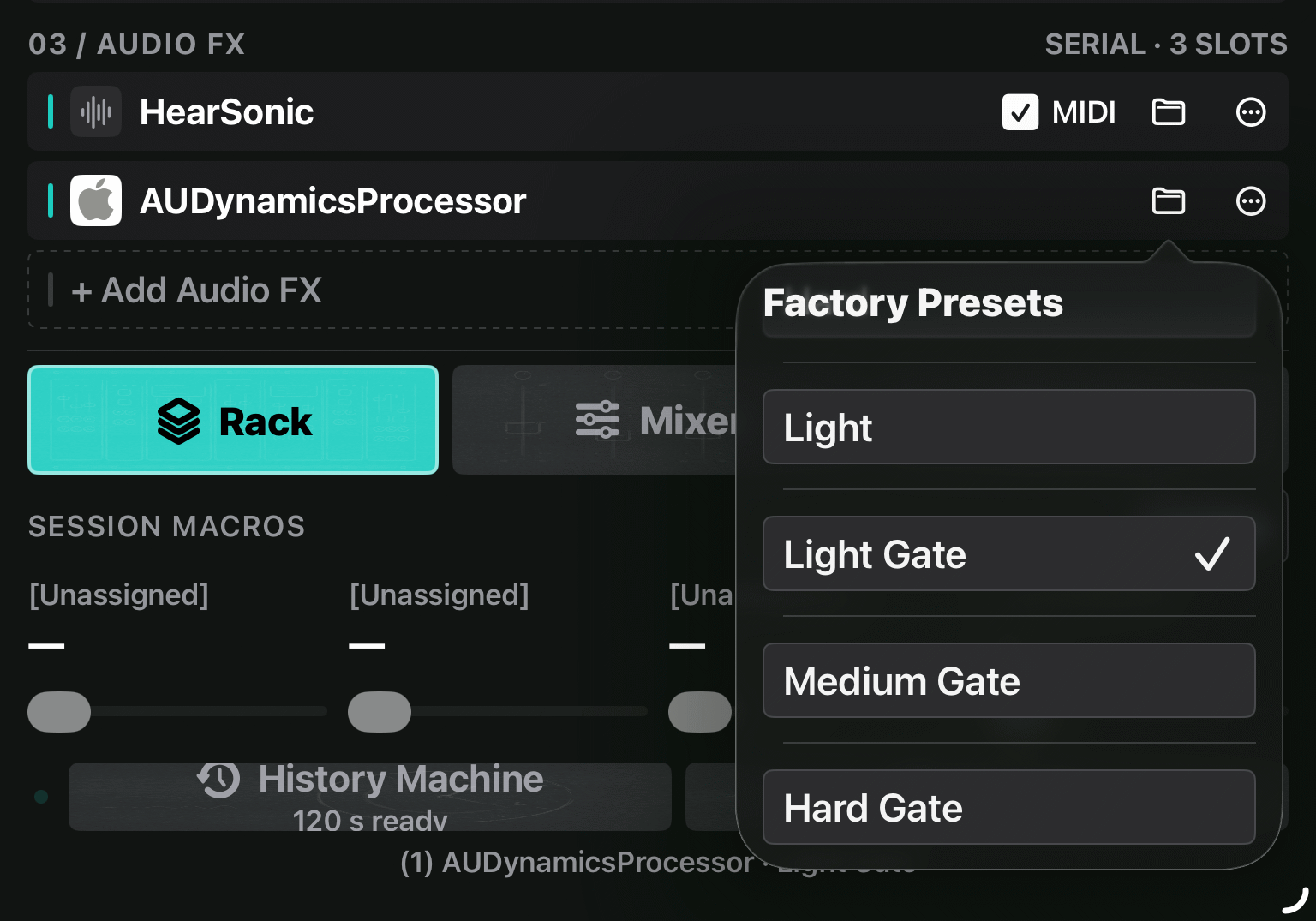
Factory presets are available directly on the slot when a plug-in exposes them, with the plug-in's editor a tap away. The current session saves automatically and returns on relaunch; saved sessions have their own browser.
Sessions use an open format: ordinary folders with readable Session.json and standard .aupreset files, preserving plug-in states and macro assignments. They can be browsed, copied and backed up in Files or Finder. Imported audio and MIDI files are stored separately in Audio Files and need to accompany a session moved to another device.
Routing and assignable parameters
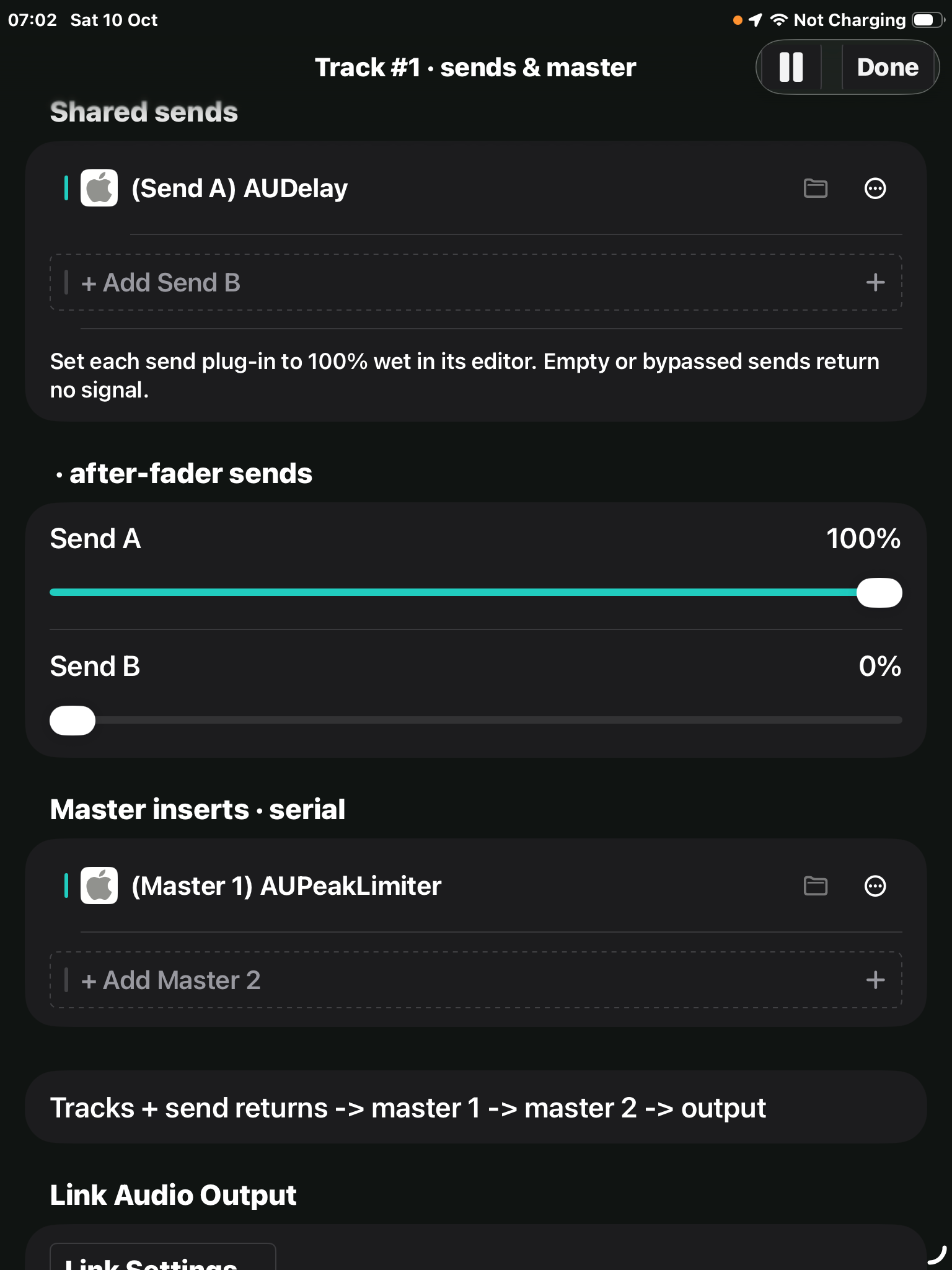
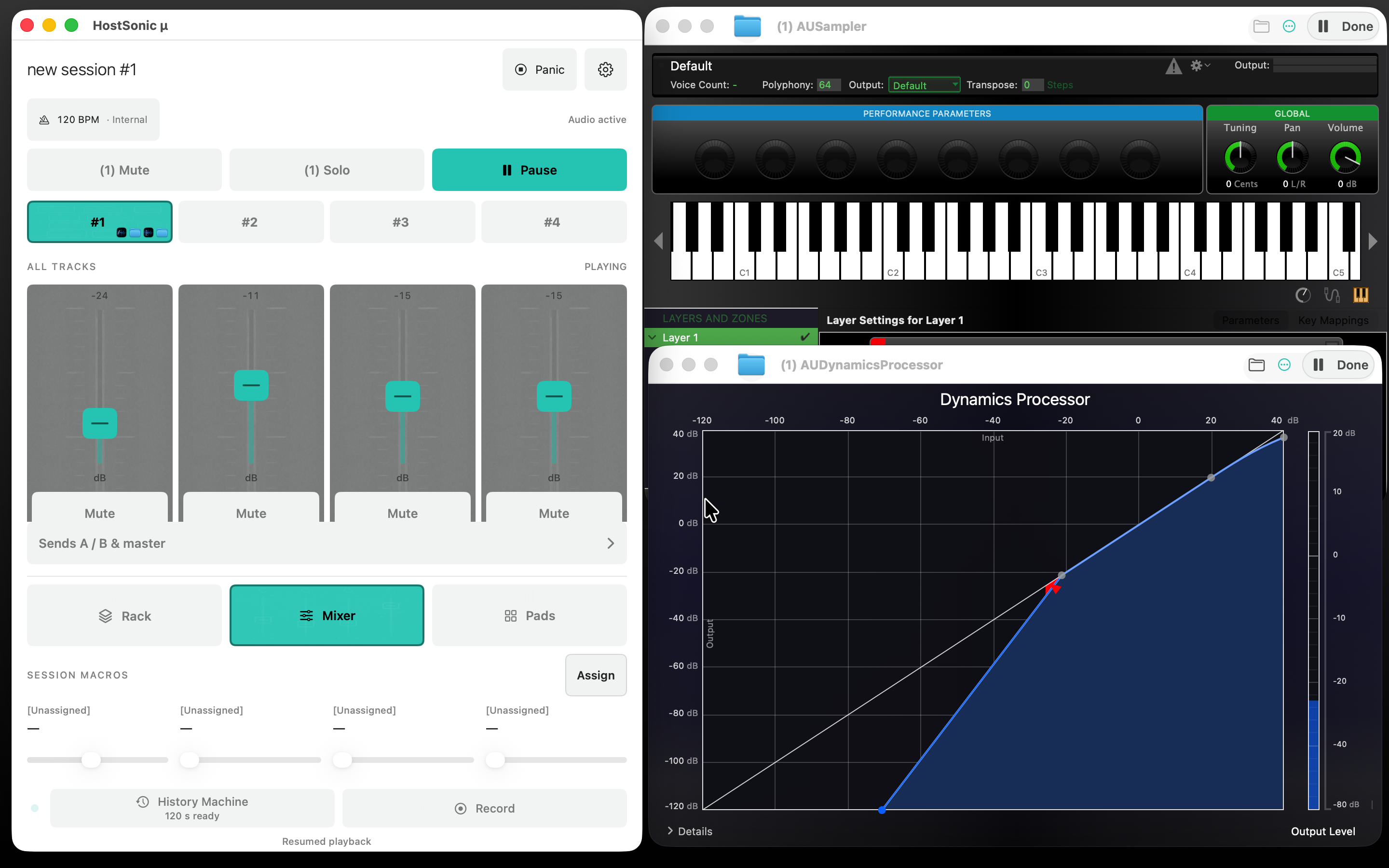
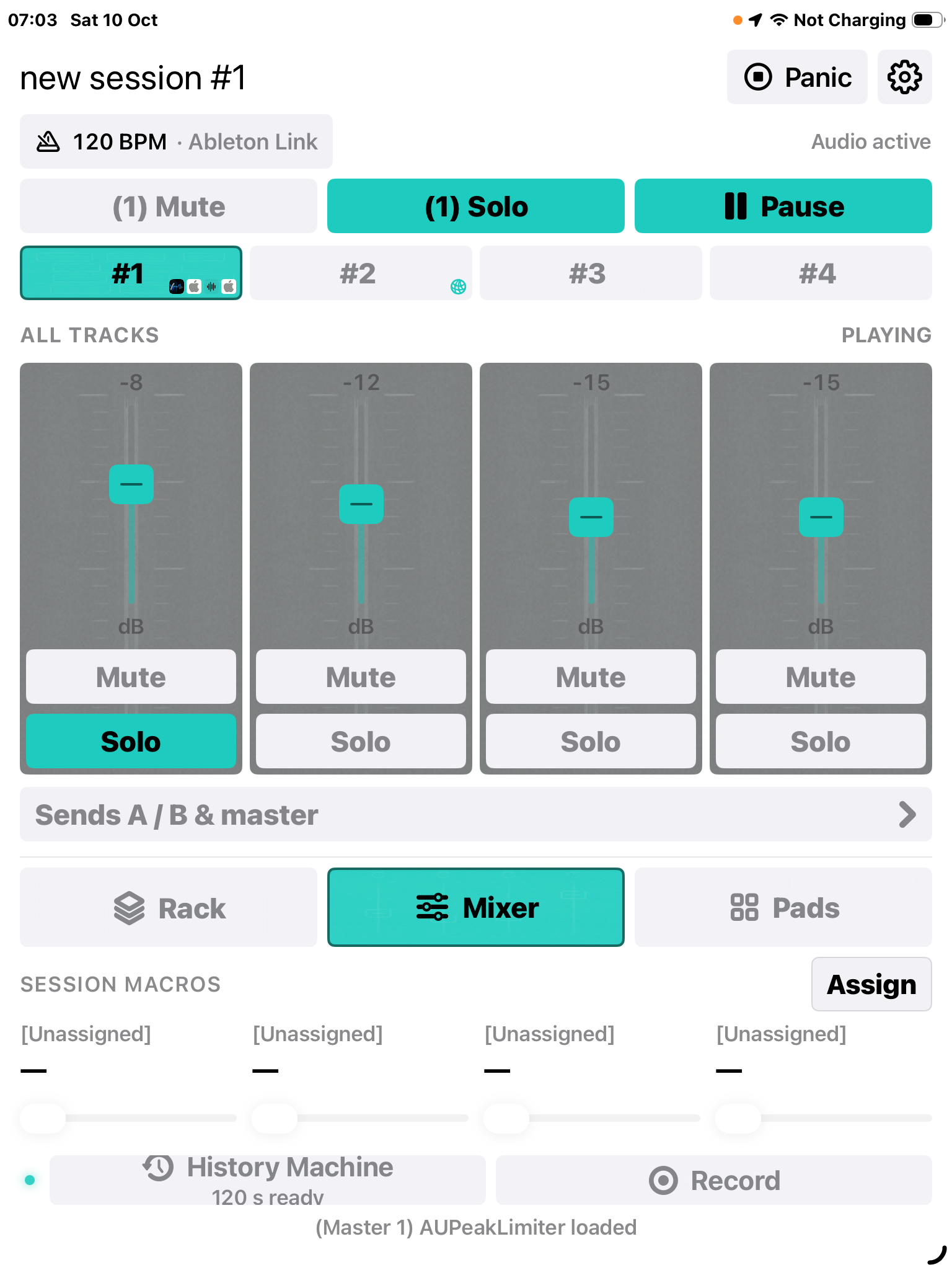
The mixer has two shared sends with per-track levels and two serial master inserts. External MIDI and pads target one selected track. MIDI processors feed the instrument and MIDI-enabled effects, including effects on device input and Link Audio tracks. Four assignable macro sliders expose parameters from any loaded plug-in on the main screen.
Recording & History Machine
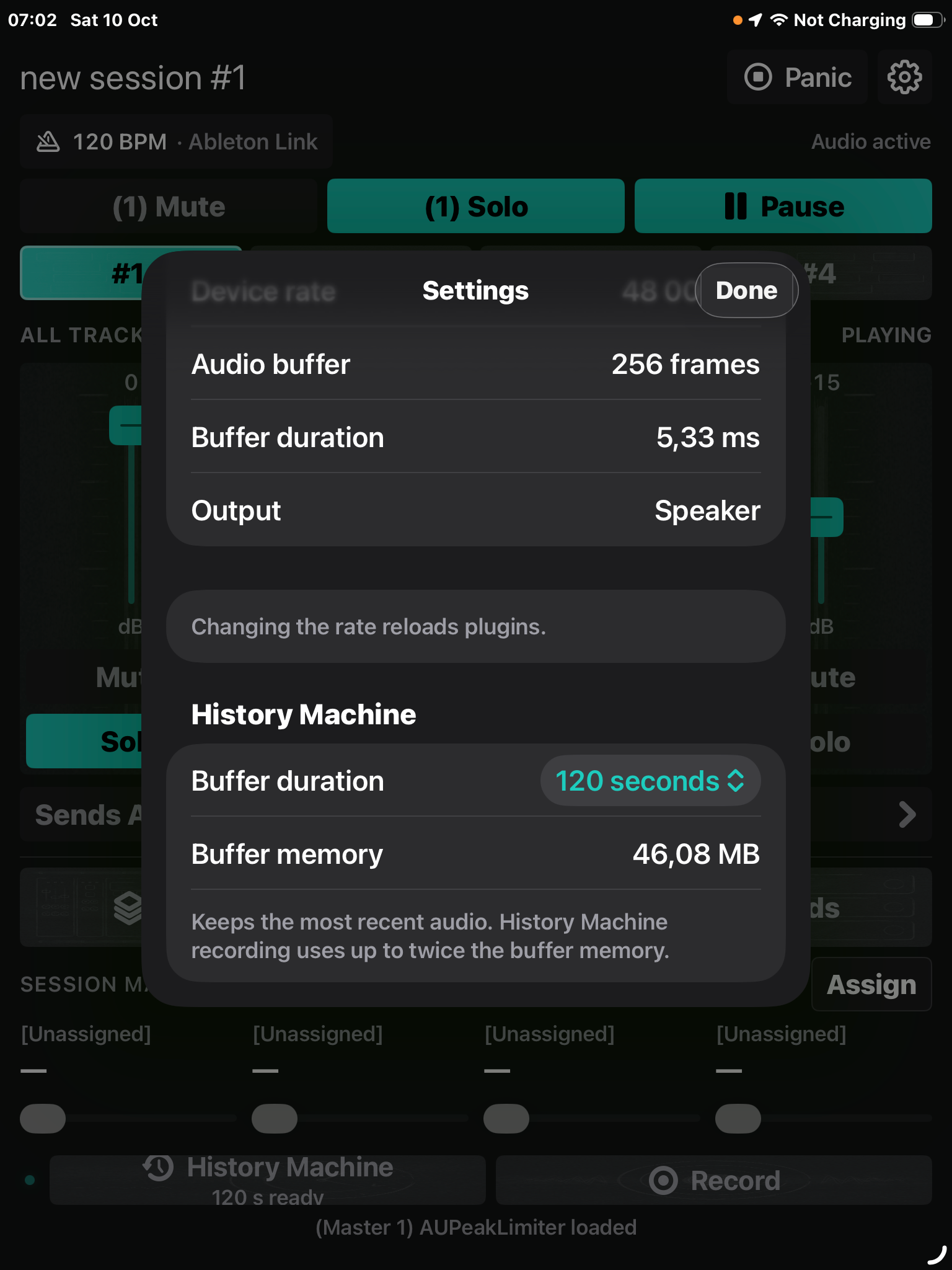
History Machine keeps a rolling buffer of the final mix, so recording can include what happened before the button was pressed. Record starts an ordinary take instead. Both save stereo audio through the system dialog.
Recording formats are AAC/M4A at 256 kbps, lossless 24-bit FLAC (default) and 24-bit WAV. History length and processing sample rate are configurable in Settings.
MIDI and Ableton Link
Sync clock
Internal clock, external MIDI clock and Ableton Link are supported, with MIDI and Link sync available as alternatives. MIDI routing includes CoreMIDI sources, network RTP sessions, Bluetooth MIDI and IAC buses on Mac. Clock output can go to a specific destination or be published as HostSonic Clock.
The transport has Play, Pause, Resume and Return to start; rewinding MIDI files keeps the audio engine and plug-ins running.
Send/Receive audio
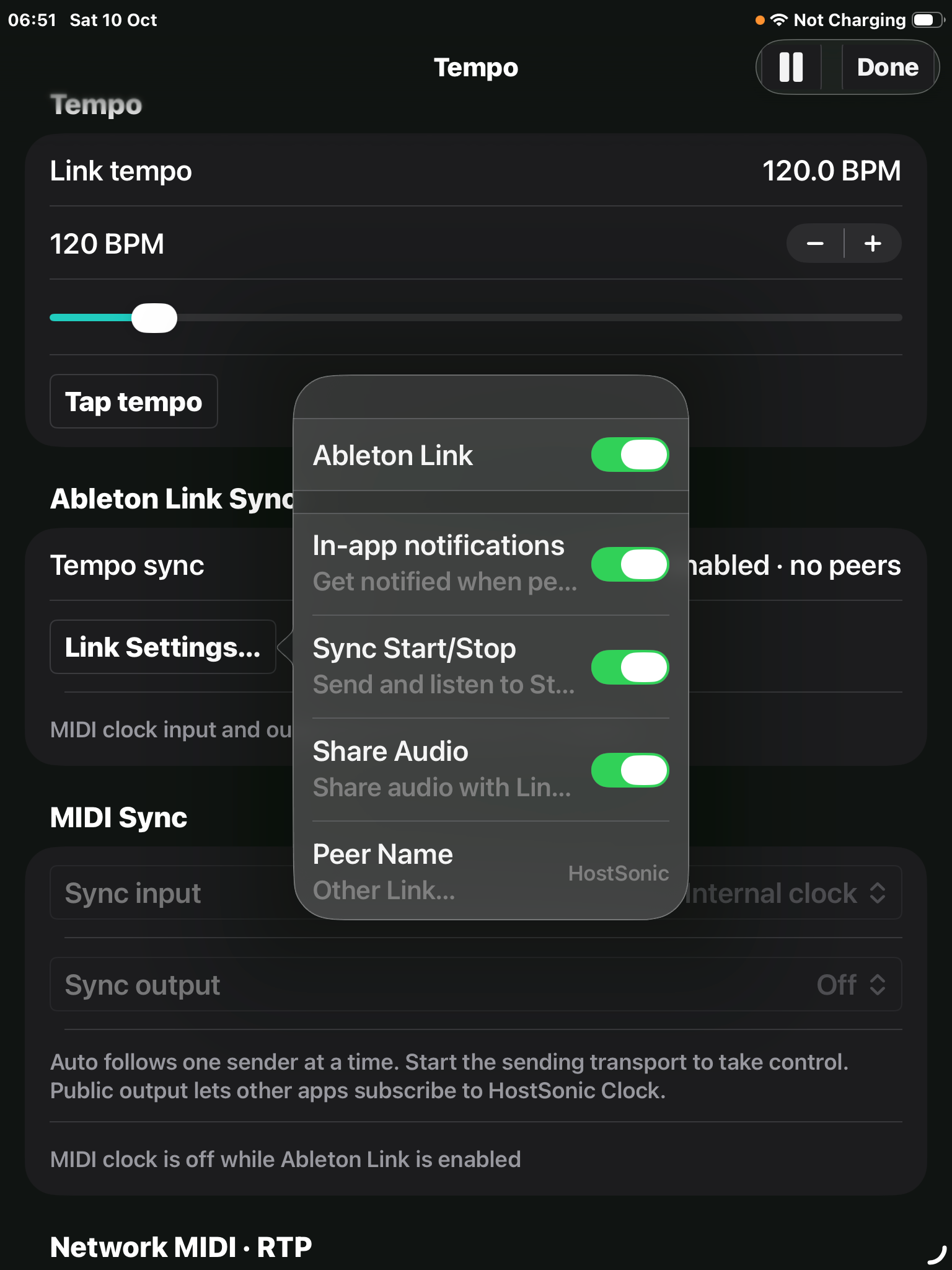
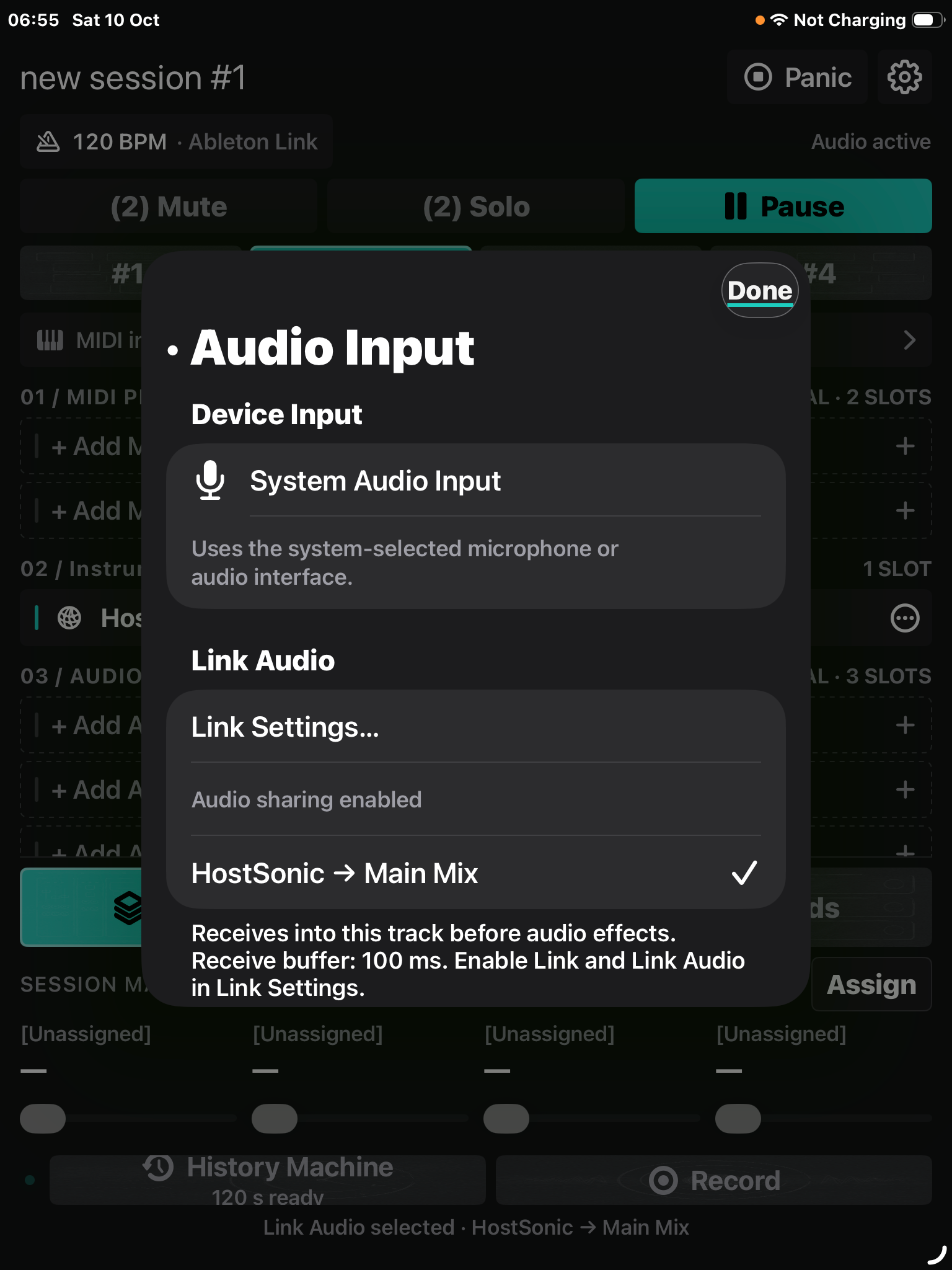
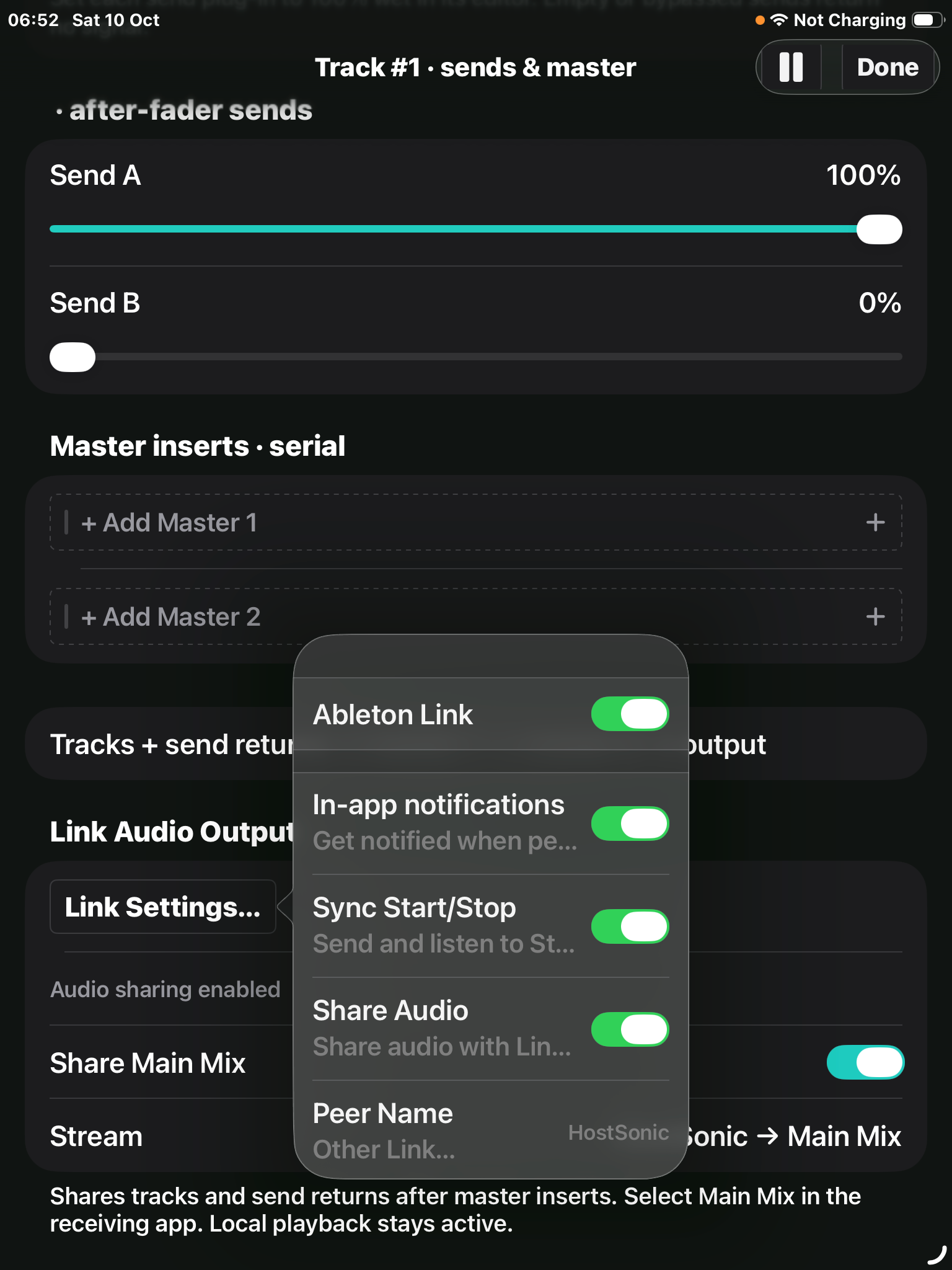
Link Audio works in both directions: incoming streams are available as track sources with the usual effects processing, and the final stereo mix can be shared from the mixer. Link controls are accessible from Tempo, the audio source picker and Link Audio Output.
Pads and MIDI files
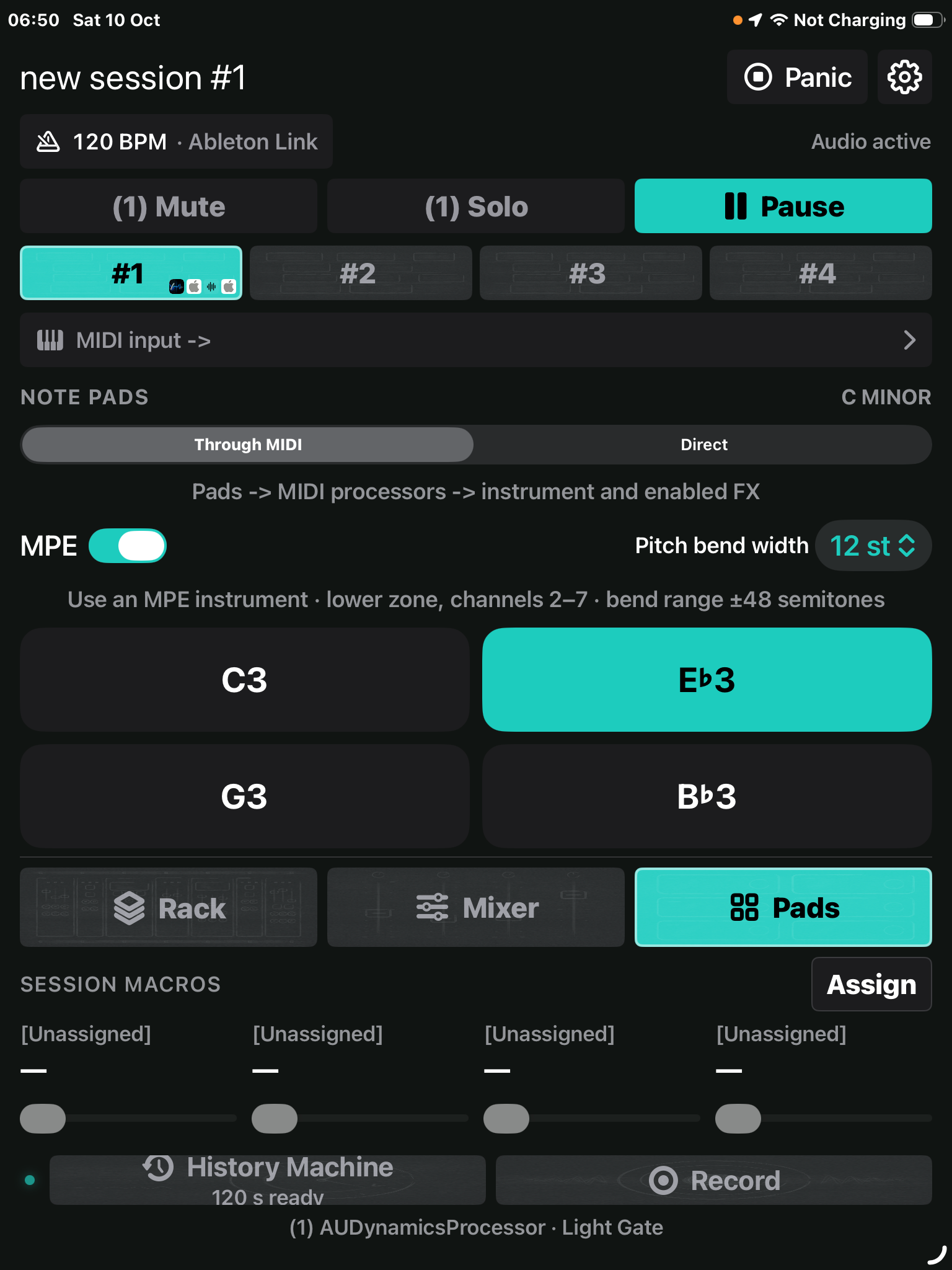
Pads play through the selected track's MIDI processors or bypass them in Direct mode. Optional MPE supports per-note pitch bend, vertical CC74 timbre and pressure on compatible displays or with Apple Pencil.
Either MIDI processor slot can also hold a MIDI file, following host tempo and transport with looping on by default. Incoming MIDI passes through, and the file drives your instruments and MIDI-enabled effects. MIDI files loaded as audio sources use the bundled General MIDI bank instead.
Available
Standalone Audio Unit host for Mac, iPhone and iPad. Hosts AUv3 plug-ins on iOS/iPadOS, and AUv3 and AUv2 plug-ins on macOS.Mac
iPhone
iPad
€9.99
One purchase includes all supported platforms.

For questions or support, contact me on X, Bluesky, or Threads.You can check out also loopypro/audiobus forums.